
Pruning
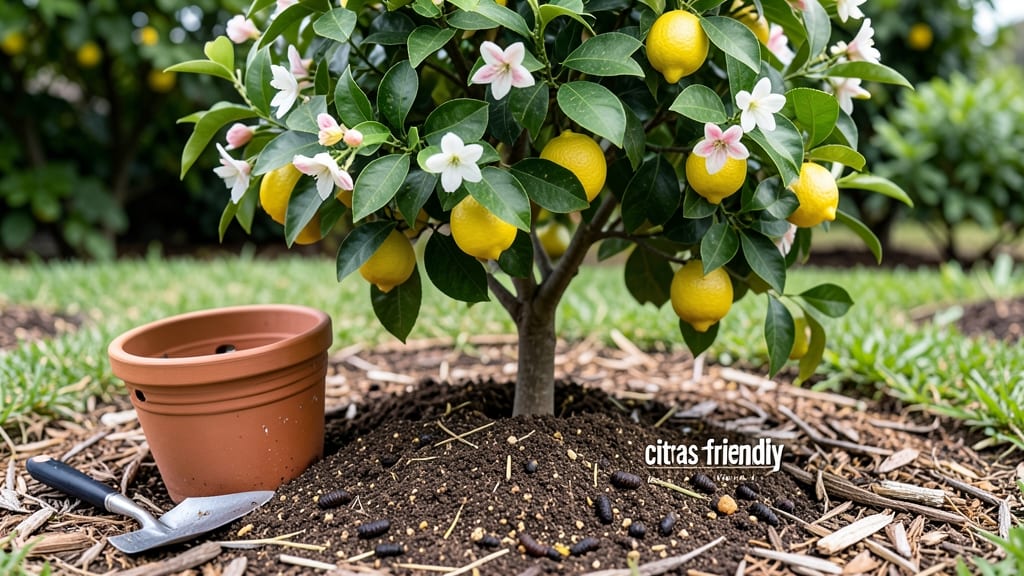
For Meyer lemon trees, the ideal soil is well-draining and slightly acidic (pH 6.0-7.0), blending compost, perlite, and sand to replicate Mediterranean conditions while preventing root rot. Heavy clay or soggy soil will kill your tree.
The Mediterranean climate where Meyer lemons originated demands loose, airy soil that mimics their natural habitat. 🌱 A slightly acidic pH (6.0-7.0) prevents iron deficiency, which causes yellowing leaves—a common problem in alkaline soils.
The right mix (50% garden soil, 25% compost, 15% perlite, 10% sand) ensures roots get oxygen while holding enough moisture without drowning. I've found adding pine bark fines boosts acidity naturally, while container growers should use a slightly sandier blend to prevent compaction.
This soil combination isn't just about drainage—it's about replicating the tree's native environment. 💛 Mediterranean soils are typically rocky and fast-draining, which is why perlite and sand become essential components.
The compost provides organic matter that feeds beneficial microbes, while the slightly acidic pH ensures the tree can access all the nutrients it needs without stress. When planting, always check your local soil's pH first—amendments like sulfur or peat moss may be needed if your native soil is too alkaline.
💡 In This Article
- Why Acidic, Well-Draining Soil Is Critical for Meyer Lemon Trees
- DIY Meyer Lemon Tree Soil Mix: Best Ingredients and Ratios
Why acidic, well-draining soil is critical for Meyer lemon trees
The slightly acidic soil range of 6.0-7.0 isn't arbitrary—it's directly tied to how Meyer lemon trees absorb iron. At higher pH levels (above 7.5), iron becomes chemically locked in the soil as insoluble oxides, starving the tree of this essential nutrient.
This deficiency causes chlorosis, where leaves turn yellow between veins while maintaining green veins—a classic sign of iron stress. 🌿 The tree's native Mediterranean environment naturally produces this pH through decomposed pine needles and organic matter, which is why replicating this acidity in your garden is crucial for preventing nutrient deficiencies.
Root health depends entirely on soil texture. Meyer lemon roots thrive in loose, aerated mixes because their native habitat consists of rocky, well-draining soils. Heavy clay soils (with particles less than 0.002mm in diameter) compact easily, suffocating roots by blocking oxygen and water flow.
In contrast, sandy soils (with particles 0.05-2.0mm) drain too quickly, forcing roots to work harder to find moisture. The perfect balance comes from combining 50% garden soil with 25% compost—this creates a crumbly structure that holds moisture while allowing air circulation, mimicking the Mediterranean's rocky-loam composition.
Organic matter plays a dual role: it improves nutrient uptake and microbial activity. Compost introduces beneficial fungi and bacteria that break down complex nutrients into forms the tree can absorb. For example, mycorrhizal fungi form symbiotic relationships with roots, increasing water and nutrient absorption by up to 80%.
The organic acids released during decomposition also help maintain that critical 6.0-7.0 pH range, creating an ideal environment for root growth. Without this organic component, even the best-draining soil becomes nutrient-poor over time.
One common mistake is assuming "well-draining" means bone-dry soil. The Mediterranean climate actually provides consistent moisture through its mild winters and summer droughts—so your soil should retain 30-40% of its water capacity while still draining excess within 24 hours.
To test this, grab a handful of your soil mix: it should hold together slightly when squeezed but crumble easily when released. If it forms a tight ball, add more perlite or sand; if it falls apart completely, incorporate more compost or coconut coir.
Container growers face an additional challenge: soil compaction from watering and repotting. To combat this, mix in 15% perlite or pumice—these volcanic minerals create air pockets that prevent compaction while improving drainage.
The key is maintaining this structure over time: every 6-12 months, gently fluff the top 2-3 inches of soil and add a 1-inch layer of fresh compost to replenish organic matter. This mimics how Mediterranean soils naturally replenish through seasonal organic inputs like fallen leaves and pine needles.
What most people overlook is how soil temperature affects root development. Meyer lemon roots prefer temperatures between 60-75°F—colder soils slow nutrient uptake, while hotter soils (above 85°F) can cause root burn.
In containers, this means avoiding dark-colored pots that absorb heat, and using 3-4 inch deep containers to maintain stable root-zone temperatures. Mulching with 2-3 inches of pine bark fines also helps regulate soil temperature while slowly releasing acidity as it decomposes.