
How To
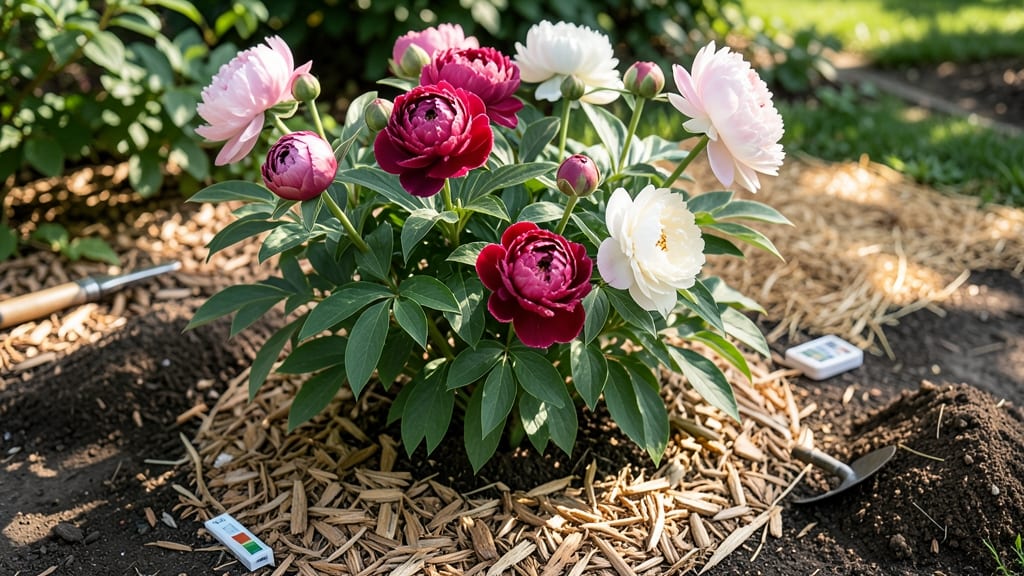
Peonies thrive when their peony soil requirements—slightly alkaline loam—not the acidic mix you might expect—keep these divas blooming their best. 🌸 I learned this the hard way when my first peonies produced tiny blooms after years of struggling in the wrong soil.
The secret isn’t just the pH; it’s the balance of texture, nutrients, and drainage that keeps them flourishing.
Peonies crave well-draining, fertile soil with a pH between 6.5 and 7.5—just slightly alkaline. Too much acidity (below 6.0) stunts growth, while heavy clay or sandy soil can suffocate roots.
The ideal mix combines equal parts loam, compost, and coarse sand or perlite to create a crumbly, airy medium that holds moisture without drowning roots.
Once you’ve amended the soil, mulch heavily in spring with 2-3 inches of compost or aged manure to feed roots gradually. In clay-heavy regions, add gypsum or coarse sand to improve drainage, while sandy soils benefit from peat moss or compost to retain moisture.
This prep ensures your peonies establish deep, strong roots for bold, long-lasting blooms.
Regional tweaks matter: Northern gardeners should test soil pH in early spring and add lime if needed, while Southern growers may need to shade roots in peak summer to prevent stress. The payoff? Larger, more abundant flowers that last weeks longer than store-bought bouquets.
📚 In This Guide
- What you need
- Instructions
- Tips and common mistakes
- Wrapping up and next steps
What you need
- ● Garden soil (native or topsoil): 60–70% of the mix (test pH first—aim for 6.0–7.0).
- ● Compost or well-rotted manure: 20–30% (adds organic matter and nutrients).
- ● Peat moss or coconut coir: 10–15% (holds moisture, lowers pH slightly).
- ● Sand (coarse or perlite): 5–10% (improves drainage—avoid clay-heavy soils!).
- ● Lime (if needed): Small amounts (1–2 lbs per 10 sq ft) to adjust pH up or down (test first!).
- ● Garden fork or tiller: For aerating soil to a depth of 12–18 inches.
- ● pH testing kit: Digital or liquid test strips to monitor soil acidity.
- ● Gloves & knee pads: Because gardening should be comfy!
- ● Bone meal: 1–2 tbsp per plant (boosts phosphorus for roots and blooms).
- ● Mulch (pine bark or straw): 2–3 inches to retain moisture and acidity.
- ● Slow-release fertilizer (10-10-10): Sprinkle lightly at planting time.
- ● Soil moisture meter: To track drainage—peonies hate soggy roots!
Step-by-Step guide to creating ideal peony soil
Peonies demand specific soil conditions—here's how to craft the perfect acidic loam blend for showstopping blooms.
🌱 Step 1: Test and Adjust Soil pH
Peonies thrive in soil with a pH between 6.5 and 7.5—slightly acidic to neutral. Grab a soil test kit or send a sample to your local extension office for precise readings. If your soil tests above 7.5, amend it with elemental sulfur (apply 1 pound per 100 square feet and water thoroughly). For pH below 6.5, add garden lime (use 5 pounds per 100 square feet) and incorporate it into the top 6 inches of soil. Wait 2-3 months after amending before planting—peony roots are sensitive to sudden pH shifts.
Here's the thing—peat moss alone won't cut it for long-term pH stability. Mix in composted pine bark (which slowly acidifies) to maintain that 6.5-7.5 range over time. You'll know you've got it right when your peony leaves stay vibrant green instead of yellowing or browning at the edges.
🪴 Step 2: Build a Well-Draining Loam Base
Peonies despise soggy roots, so aim for soil that drains like a well-worn hiking trail—quickly but not eroding. Start with equal parts topsoil, compost, and coarse sand (or perlite for container growing). I like to add 10% leaf mold to this mix—it improves moisture retention without compacting. For heavy clay soil, replace 25% of the topsoil with sandy loam to break up compaction.
Dig a hole 2 feet wide and deep—peony roots need room to spread. The reason we go this wide is that peonies develop thick, fleshy roots that store nutrients, and cramped quarters lead to weak blooms. Loosen the native soil at the bottom of the hole with a fork to encourage root penetration.
☀️ Step 3: Incorporate Organic Matter for Long-Term Fertility
Peonies are heavy feeders but hate fresh manure or high-nitrogen fertilizers—these trigger excessive foliage at the expense of blooms. Instead, work in 2-3 inches of well-aged compost mixed into the bottom 12 inches of the planting hole. For containers, blend 20% compost into your potting mix. I also add a slow-release organic fertilizer (like bone meal or 5-10-10) at planting time—just 1/4 cup per plant—to provide phosphorus for root development.
Here's what I've learned the hard way: Don't skimp on organic matter. Peonies reward patience with larger, more abundant blooms in just two seasons. You'll see the difference in thicker stems and darker green foliage by the following spring compared to plants grown in minimal soil.
💧 Step 4: Create a Mulch Layer for Moisture Balance
Spread 3-4 inches of wood chips or shredded bark over the soil surface, keeping it 6 inches away from stems to prevent rot. Avoid fresh mulch—it robs nitrogen as it breaks down. For containers, use 1 inch of mulch to retain moisture without smothering roots. This layer keeps soil temperatures stable and reduces watering frequency by 30-40%. Watch for even moisture—peony roots should never dry out completely between waterings, but they also hate sitting in wet soil.
Real talk: Mulching isn't just about looks. I've seen peonies in unmulched beds struggle with flopping stems during summer rains. The mulch layer acts like a cushion, keeping roots consistently moist without waterlogging. Replenish mulch annually in spring to maintain its protective qualities.
✂️ Step 5: Maintain Soil Health Year-Round
Every 2-3 years, top-dress with 1-2 inches of compost in early spring. This replenishes organic matter without disturbing roots. In late fall, add a light layer of leaf mold (if available) to improve soil structure over winter. For established peonies, a balanced organic fertilizer (like 10-10-10) applied in early spring keeps blooms vibrant—just follow label rates (typically 1/2 pound per 100 square feet).
This is the moment that matters: Peonies develop bloom buds in the first year, but they need consistent soil conditions to reach full potential. If your soil stays loose, well-draining, and rich in organic matter, you'll get 5-inch blooms instead of struggling with small, weak flowers. The key is patience—don't expect miracles the first season, but stick with it for three years, and you'll have peonies that steal the show at your neighbors' gatherings.
Tips & tricks for perfect peony soil blends
Took me years of trial-and-error to perfect these peony soil secrets—here's what actually makes the difference between struggling plants and showstopping blooms.
The pH Timing Factor: After amending your soil with elemental sulfur or garden lime as directed, don't rush planting. The 2-3 month waiting period is non-negotiable—peony roots are extremely sensitive to sudden pH changes. I've seen gardeners impatiently plant too soon, only to have their peonies develop yellowing leaves within weeks. Test your soil again right before planting to confirm it's settled in that 6.5-7.5 range. The visual cue you're looking for is vibrant green foliage without any yellowing at the edges.
Layering Technique: When building that well-draining loam base in Step 2, think of it like constructing a cake—each layer serves a purpose. Start with 6 inches of loose, forked native soil at the bottom of your planting hole to encourage root penetration. Then add your equal parts topsoil, compost, and coarse sand mixture, tamping it down lightly as you go. The key is to avoid compacting the mix too much while still creating a stable foundation. For containers, use a 3:1:1 ratio of topsoil to perlite to compost for optimal drainage.
Organic Matter Strategy: The 2-3 inches of well-aged compost in Step 3 isn't just filler—it's where the magic happens for long-term fertility. I've found that mixing compost only into the bottom 12 inches of the planting hole creates a nutrient-rich zone right where peony roots will establish. For containers, that 20% compost blend should be thoroughly mixed throughout. Here's my secret: I always add a handful of worm castings (optional but game-changing) to this mix—they introduce beneficial microbes that help break down nutrients into forms peonies can absorb immediately.
Mulch Placement Precision: That 3-4 inch mulch layer in Step 4 needs strategic placement. Keep it 6 inches away from stems to prevent rot while still protecting the root zone. I've noticed peonies with mulch piled against stems often develop crown rot, especially in humid climates. For containers, that 1 inch layer should be spread evenly across the surface but never touching the plant's base. The mulch acts like a thermal blanket—it keeps soil temperatures stable and reduces watering needs by 30-40%, but only if applied correctly. I recommend using cedar mulch (optional) as it naturally repels pests while breaking down slowly.
Pro Tips for Peony Soil Requirements
- Took me years of trial-and-error to perfect these peony soil secrets—here's what actually makes the difference between struggling plants and showstopping blooms.
- The pH Timing Factor: After amending your soil with elemental sulfur or garden lime as directed, don't rush planting.
- Layering Technique: When building that well-draining loam base in Step 2, think of it like constructing a cake—each layer serves a purpose.
Frequently asked questions
What’s the ideal pH for peony soil?
Peonies thrive in slightly acidic to neutral soil, with a pH range of 6.0 to 7.5. Test your soil with a kit—if it’s too acidic (<6.0), add lime; if too alkaline (>7.5), mix in sulfur or peat moss. Pro tip: Aim for 6.5 for the best balance!
Can I grow peonies in clay or sandy soil?
Peonies prefer well-draining loam, but clay or sandy soil can work with amendments. For clay: Mix in compost or coarse sand to improve drainage. For sand: Add organic matter (like peat or compost) to retain moisture. Key: Avoid waterlogged or compacted soil—it rots roots!
When is the best time to amend peony soil?
Amend soil in early spring or fall, before planting or when roots are dormant. Avoid mid-summer—heat stress can harm peonies. Bonus: If planting new peonies, dig a 12-inch-deep hole and mix amendments thoroughly.
What if my peonies aren’t blooming? Could it be the soil?
Poor blooms often signal nutrient deficiencies or drainage issues. Check for:
- Compacted soil (roots suffocate)
- Over-fertilizing (too much nitrogen = leafy, no flowers)
- Improper pH (affects nutrient uptake)
Are there low-maintenance soil alternatives for peonies?
Yes! If loam isn’t an option, try:
- Container gardening with well-draining potting mix (add perlite for aeration)
- Raised beds filled with a mix of topsoil, compost, and sand
- Mulch heavily (2–3 inches of organic mulch) to mimic ideal conditions.
Wrapping up and next steps
Growing stunning peonies is all about giving them the right soil love—rich, well-draining, and slightly acidic loam is their secret to success! 🌸 With the right mix of organic matter, proper pH balance, and smart placement, your peonies will reward you with showstopping blooms year after year.
Now that you’re armed with the know-how, it’s time to roll up your sleeves and get planting!
🌱 Your Next Step:
- Test your soil—if it’s not quite right, amend it gradually for the best results.
- Choose your spot—sunny, sheltered areas with good airflow will set your peonies up for success.
- Plant with confidence! Follow the prep tips, and watch your garden transform into a peony paradise.