
How To
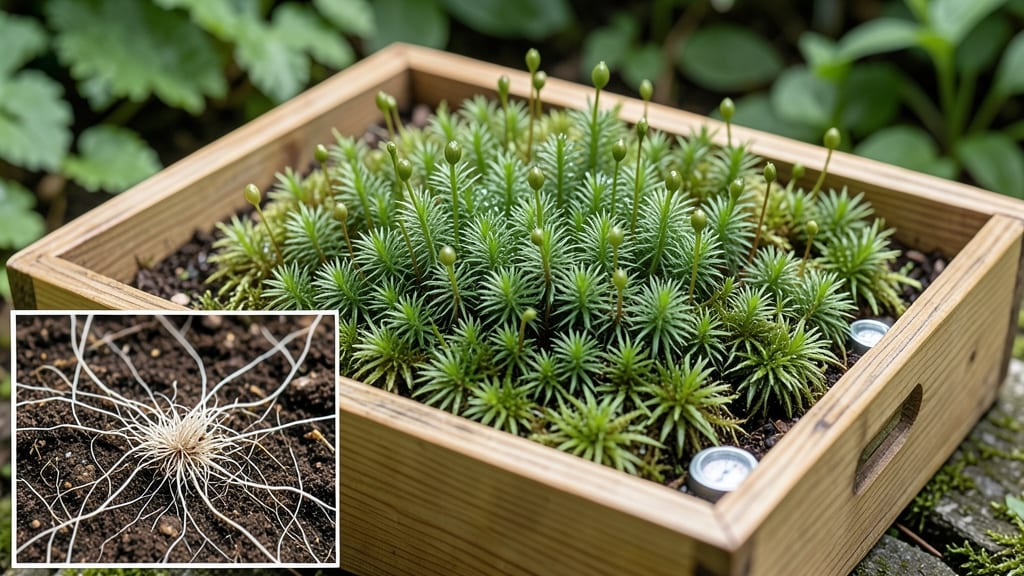
Having little soil is beneficial to moss because it thrives in shallow, moisture-retentive layers where roots can absorb water and nutrients efficiently without competition. Minimal soil reduces compaction, promotes airflow, and prevents smothering—ideal for moss’s shallow growth habits.
Moss grows best in thin layers because its root system—called rhizomes—spreads horizontally rather than digging deep. 🌿 With minimal soil, these delicate structures stay exposed to optimal moisture while avoiding the suffocating weight of thick organic matter.
This setup also prevents compaction, which can choke moss by blocking airflow and trapping excess water. Many gardeners use gravel or sand instead of soil to mimic these natural conditions, creating an environment where moss can flourish without competing with deeper-rooted plants.
For practical application, consider using a mix of coarse sand and small gravel to create the ideal shallow substrate. This combination allows water to drain efficiently while retaining enough moisture for moss to thrive.
Unlike traditional soil, which can become compacted and anaerobic, these materials stay loose and breathable—perfect for moss's shallow, spread-out growth pattern. 💫
💡 In This Article
- Moss Growth Science: Why Shallow Soil Enhances Survival
- Creating the Perfect Moss Garden: Soil-Free Techniques
Moss growth science: why shallow soil enhances survival
Moss thrives in shallow soil because its rhizomes—thread-like structures—grow horizontally just 1-3 millimeters below the surface, maximizing exposure to moisture and light. Unlike deep-rooted plants, moss absorbs water and nutrients through its leaves and stems, not buried roots.
Thin soil layers maintain this delicate balance by preventing compaction, which would crush these fragile structures and block critical airflow.
The lack of thick organic matter also prevents suffocation—a common issue in traditional soil gardens. Moss requires a highly oxygenated environment to perform photosynthesis efficiently. When soil is shallow, water drains quickly but leaves enough moisture in the top layer for moss to stay hydrated without becoming waterlogged.
This is why moss often grows in damp but well-drained areas like forest floors or rocky outcrops.
Moisture retention is another key factor. Thin soil layers hold water near the surface where moss can access it directly, while deeper soil would require moss to stretch its rhizomes downward—an inefficient use of energy.
For example, Fontinalis antipyretica (a common aquatic moss) thrives in 1-2 centimeter water depths, proving how shallow conditions support its growth. This shallow-water adaptation mirrors the benefits of minimal soil in garden settings.
Compaction is the silent killer of moss gardens. Traditional soil compresses over time, reducing pore space and trapping water, which leads to anaerobic conditions—moss cannot survive without oxygen. In contrast, thin soil layers stay loose, allowing air to circulate freely.
This is why moss often colonizes cracks in pavement or gravel beds, where soil is naturally minimal and porous.
Nutrient uptake also benefits from shallow soil. Moss relies on atmospheric nitrogen and minerals dissolved in water rather than soil nutrients. Thin layers ensure these dissolved nutrients remain accessible near the surface, where moss can absorb them efficiently.
For instance, Polytrichum commune (a common haircap moss) grows in nutrient-poor environments by capturing nitrogen directly from the air—a strategy that works best in shallow, open substrates.
Consider the texture: moss feels soft and velvety because its leaves are designed to maximize surface area for water absorption. In thick soil, these leaves would become clogged with particles, reducing their effectiveness.
Thin soil keeps the leaves exposed, allowing them to function optimally. This is why moss gardens often use coarse sand or gravel—these materials mimic natural rocky surfaces where moss thrives without competition.