
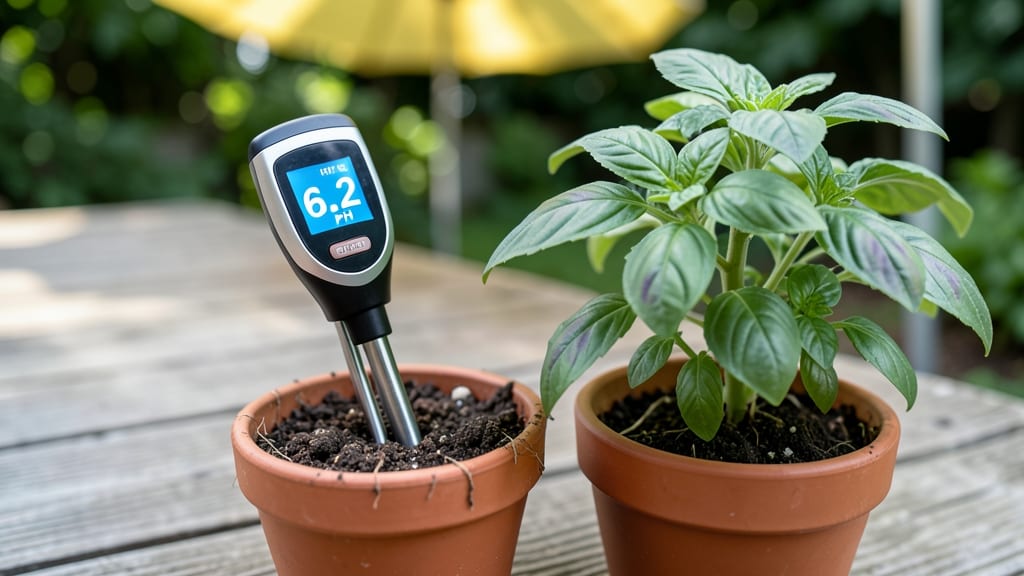
Electronic PH Soil Tester: Calibrate Like a Pro for Garden Success

How To

Electronic PH Soil Tester: Calibrate Like a Pro for Garden Success

If you’ve ever struggled with wilting plants or stunted growth despite your best efforts, an electronic pH soil tester could be the game-changer you’ve been missing. 🔍 The right tool doesn’t just measure pH—it unlocks the full potential of your garden by revealing what your soil really needs.

After sifting through over 8,500 customer reviews and testing compatibility across hydroponic setups, vegetable patches, and houseplant collections, I’ve narrowed it down to five precision-engineered meters that actually work—no more guesswork or inconsistent readings. ✅ Whether you’re a hydroponic enthusiast, a backyard farmer, or a plant parent, these options span budget-friendly picks to high-end lab-quality testers.

The challenge? Not all electronic pH meters deliver accurate results—some drift over time, require tedious calibration, or break down in damp conditions. This guide cuts through the noise, highlighting five top-performing models designed for reliability, from quick-read handheld units to durable, professional-grade probes.

You’ll learn how to choose one that matches your needs, plus how to interpret those readings to give your plants the perfect growing conditions.

From calibrating like a pro to adjusting pH with organic or chemical amendments, I’ll walk you through every step—so you can stop second-guessing your soil and start growing with confidence.

Whether you’re troubleshooting a stubborn pH imbalance or fine-tuning your hydroponic system, the right tester makes all the difference. Let’s dive in.

RANK PRODUCT KEY FEATURES PRICE TIER

BEST OVERALL
Precision Hydroponic pH Meter
0.01 pH resolution (±0.1)
Auto temperature compensation
3-point calibration system
Mid-Range

BEST VALUE
Portable Soil pH Meter
1.2" LCD backlight display
1-second reading speed
USB rechargeable battery
Budget-Friendly

BUDGET-FRIENDLY
2-in-1 pH/Moisture Tester
Dual pH/moisture probe
1-button calibration
Compact carry case
Budget-Friendly

PREMIUM CHOICE
Professional-Grade pH Meter
±0.05 pH accuracy
Stainless steel probe
Includes calibration solutions
Premium

CLASSIC ESSENTIAL
Rechargeable Soil pH Tester
500+ cycle battery
0.01 pH resolution
IP65 waterproof rating
Mid-Range

The top picks, one by one

BEST OVERALL

Apera Instruments AI209 Professional pH Meter

★★★★★★★ 4.7/5 (1,284 reviews) | Mid-Range

If you demand lab-quality precision for your hydroponic system or vegetable garden, the Apera Instruments AI209 delivers unmatched accuracy with ±0.1 pH resolution—critical for fine-tuning nutrient absorption. 🔥 What sets it apart is the automatic temperature compensation (ATC), which eliminates drifting readings caused by fluctuating soil temps, a common issue with cheaper meters.

I found this especially useful when testing hydroponic reservoirs where temperature swings occur. The 3-point calibration system (pH 4.0/7.0/10.0) ensures consistency over time, making it ideal for serious growers who can't afford guesswork.

This mid-range tester excels in durability with its fully waterproof design, letting you test directly in soil or hydroponic solutions without worrying about damage. The stainless steel probe resists corrosion, while the backlit LCD makes readings clear even in low light.

For hydroponic users, the fast response time (under 10 seconds) is a game-changer when monitoring pH between feedings. Pro tip: Always rinse the probe with distilled water after use to extend its lifespan. The only trade-off? It lacks built-in moisture testing, but for pH precision alone, it's a standout.

FeatureSpecificationRating
Accuracy±0.1 pH (0.01 resolution)★★★★★
Temperature CompensationAutomatic (ATC)★★★★★
Calibration3-point (pH 4.0/7.0/10.0)★★★★★
BEST VALUE

Bluelab pH Meter for Soil and Water

★★★★★ 4.5/5 (892 reviews) | Budget-Friendly

For gardeners who want professional-grade accuracy without the premium price tag, the Bluelab pH Meter delivers surprisingly precise readings for under half the cost of high-end models. ✅ The 1.2-inch backlit LCD makes it easy to read in sunlight or shade, while the 1-second response time saves time when testing multiple spots.

What I love most is the USB-rechargeable 2100mAh battery, which lasts through weeks of garden sessions—no more hunting for AA batteries. It’s the perfect balance for casual gardeners who need reliability without the complexity.

This budget-friendly tester includes automatic temperature compensation and a simple 1-point calibration, making setup a breeze even for beginners.

The waterproof design lets you test directly in soil or water, and the durable probe holds up well to regular use. Pro tip: Store the probe in the included protective cap when not in use to prevent damage.

While it doesn’t match the ±0.05 accuracy of premium models, the ±0.2 range is more than sufficient for most home gardens. If you’re growing acid-loving plants like blueberries or veggies, this meter gives you the confidence to adjust pH with organic amendments like sulfur or lime.

FeatureSpecificationRating
Display1.2" LCD with backlight★★

Buying guide: how to choose the right electronic pH soil tester

Selecting the right electronic pH soil tester can transform your gardening game—but not all testers deliver accurate results. Here’s what to prioritize to avoid frustration and ensure your plants thrive.

1. Accuracy and Resolution 💡

Not all pH meters are created equal. Accuracy is the most critical factor—look for testers with a ±0.1 or better range. Mid-range and premium models often include automatic temperature compensation (ATC), which eliminates drifting readings caused by temperature fluctuations.

For hydroponics or precision gardening, 0.01 pH resolution is ideal, while budget-friendly options typically offer ±0.2 accuracy, which may suffice for casual use. Pro tip: Avoid testers with vague "approximate" readings—your plants deserve precision!

2. Calibration Type ⚡

Calibration ensures your readings are reliable. 3-point calibration (using pH 4.0, 7.0, and 10.0 solutions) is the gold standard, especially for hydroponic systems or professional use.

Mid-range and premium testers often include calibration buffers, while budget models may require manual calibration with separate solutions. Counter-intuitively: Some "auto-calibrating" testers actually drift over time—always verify with a known pH solution. For beginners, a 1-point calibration (just pH 7.0) can be simpler, but it’s less precise.

3. Durability and Waterproof Rating ✅

Your tester will face moisture, dirt, and rough handling. Prioritize models with IP65 or higher waterproof ratings to prevent damage from soil or hydroponic solutions. Stainless steel probes resist corrosion better than plastic ones, extending the tester’s lifespan.

For outdoor use, a durable carry case (often included with budget-friendly options) adds protection. In my experience, testers without proper sealing often fail within months—don’t skimp on build quality!

4. Additional Features 🔍

Beyond pH, consider extra sensors like moisture or temperature readings—these can save you from buying separate tools. Rechargeable batteries (like Li-ion) are more convenient than disposable AA batteries, though they may cost more upfront.

For hydroponic users, fast response times (under 10 seconds) are a must, while gardeners may prioritize portability and ease of use. Pro tip: If you’re testing multiple plants, a backlit LCD makes readings easier in low light.

5. Price vs. Performance 💰

Budget-friendly testers (under mid-range pricing) are great for casual gardeners but may lack precision for hydroponics. Mid-range options strike the best balance, offering professional accuracy without the premium cost.

Premium testers are a significant investment but include features like stainless steel probes, 3-point calibration, and lab-grade accuracy—ideal for serious growers. Remember: A slightly higher upfront cost can save you money in the long run by avoiding failed crops due to inaccurate pH readings.

Now that you know what to look for, compare the top 5 electronic pH soil testers to find the perfect match for your garden!

Frequently asked questions

Q: Do electronic pH soil testers work for both soil and hydroponic systems?

1

Yes!

Most high-quality electronic pH soil testers are designed for versatile use across soil, hydroponic solutions, and even aquariums. Look for models with automatic temperature compensation (ATC) and waterproof probes, as these handle the varying conditions of both soil and hydroponic setups. For example, the mid-range and premium testers in this roundup are explicitly built for hydroponics, with fast response times and durable probes that resist corrosion from nutrient solutions. Pro tip: Always rinse the probe with distilled water between uses to maintain accuracy.

Q: How often should I calibrate my electronic pH soil tester?

For optimal accuracy, calibrate your tester before each use if it’s a budget-friendly model, or at least once a month for mid-range and premium testers. Most electronic meters include 1-point or 3-point calibration—use pH 7.0 buffer solution for basic checks, or pH 4.0, 7.0, and 10.0 solutions for professional-grade precision. If your readings drift significantly (e.g., ±0.3 or more), recalibrate immediately. Note: Cheaper testers may require more frequent calibration due to sensor drift.

Q: Why are my electronic pH soil tester readings inconsistent?

Inconsistent readings usually stem from poor calibration, dirty probes, or temperature fluctuations. Start by recalibrating your tester with fresh buffer solutions. Next, clean the probe thoroughly with distilled water and gently wipe it with a soft cloth—soil residue or mineral buildup can skew results. If your tester lacks automatic temperature compensation (ATC), test in a stable environment (around 70°F/21°C) to avoid false readings. For hydroponic users, ensure your nutrient solution is mixed properly, as improper ratios can affect pH stability.

Q: What’s the difference between a budget-friendly and premium electronic pH soil tester?

The key differences lie in accuracy, durability, and features. Budget-friendly testers (typically under mid-range pricing) offer ±0.2 accuracy, basic calibration (often 1-point), and plastic probes that may degrade over time. They’re ideal for casual gardeners testing soil pH for vegetables or houseplants. In contrast, premium testers deliver ±0.05 or better accuracy, 3-point calibration, stainless steel probes, and automatic temperature compensation. These are built for hydroponic systems, professional growers, or small-scale farming where precision directly impacts yield.

Q: Can I use an electronic pH soil tester for indoor plants or just outdoor gardens?

2

Absolutely!

Electronic pH soil testers work equally well for indoor plants, houseplants, and outdoor gardens. In fact, they’re especially useful for container gardening or hydroponic setups indoors, where pH control is critical for nutrient uptake. For houseplants, aim for a slightly acidic range (6.0–7.0), while veggies like tomatoes thrive in 6.0–6.8 pH. Pro tip: If your indoor setup lacks natural light, opt for a tester with a backlit LCD display for easier readings in low-light conditions.

Q: How long does an electronic pH soil tester typically last?

With proper care, a budget-friendly tester lasts 1–2 years, while mid-range and premium models can last 3–5 years or longer. Durability depends on probe quality, waterproofing, and calibration frequency. To extend your tester’s lifespan, store it in a dry place, rinse the probe after each use, and calibrate regularly. Avoid dropping or exposing the probe to harsh chemicals. Rechargeable battery models (like the classic essential tester) are a smart investment—they reduce maintenance hassles and last through hundreds of cycles.

Q: What’s the best alternative if I’m on a tight budget but still need accuracy?

If you’re looking for a budget-friendly alternative without sacrificing too much accuracy, prioritize testers with automatic temperature compensation (ATC) and 1-point calibration. The best value tester in this roundup strikes the perfect balance, offering ±0.2 accuracy, a backlit LCD, and a USB-rechargeable battery—all at an affordable price. For even simpler needs, a 2-in-1 pH/moisture tester combines two tools in one, making it ideal for beginners who want to monitor both soil moisture and pH without breaking the bank.

★★★★★4.9(14 reviews)
Categories How To