
Orchid Care
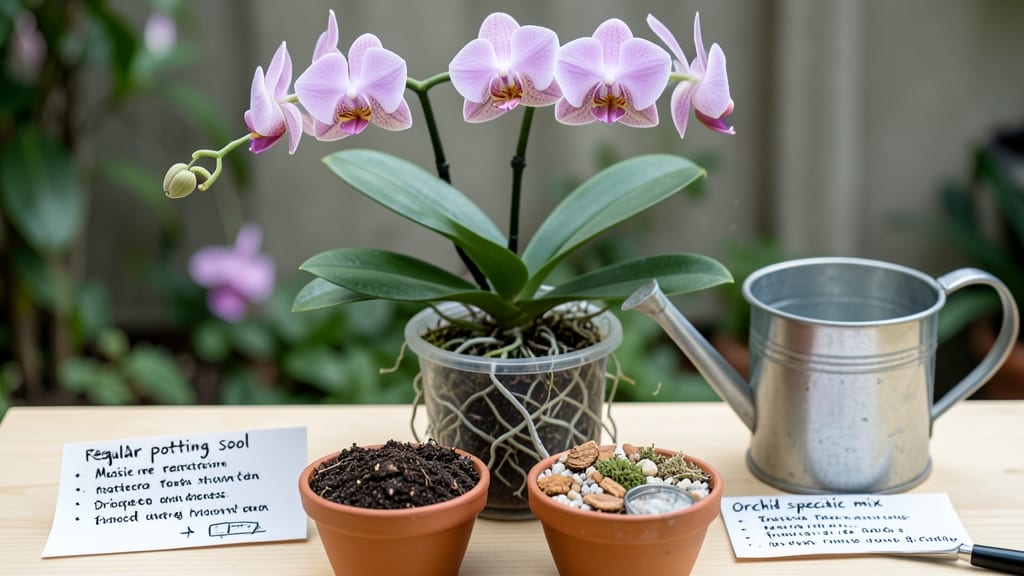
You can't use regular potting soil for orchids because it holds too much moisture, smothers delicate roots, and prevents the airflow orchids need to thrive. Instead, orchids require loose, well-draining mixes with bark, sphagnum moss, or perlite to stay healthy and prevent rot.
Regular potting soil is designed for plants that prefer consistent moisture and dense root systems, but orchids are different—they need their roots to breathe. 🌿 The dense texture of garden soil creates a suffocating environment, trapping water against roots and inviting fungal infections.
I’ve seen orchids in regular soil develop yellowing leaves and mushy roots within weeks because the excess moisture disrupts their natural balance.
Orchids rely on symbiotic relationships with fungi in their native habitats, which help them absorb nutrients efficiently. Regular soil lacks these beneficial microbes and the air pockets orchids need to mimic their epiphytic growth patterns.
For best results, opt for a mix that’s at least 50% bark or coconut husk chunks, with perlite or charcoal for extra drainage.
💡 In This Article
- Why Orchid Roots Need Specialized Growing Media
- Best Orchid-Specific Soil Mixes and DIY Alternatives
Why orchid roots need specialized growing media
Orchid roots aren't like typical houseplant roots—they're designed to absorb moisture and nutrients from the air rather than dense soil. In their natural habitats, orchids grow as epiphytes, clinging to tree bark or rocks where they encounter fluctuating moisture levels and constant airflow.
Regular potting soil, with its fine, compact texture, mimics a swampy environment that orchids can't tolerate. The tiny air pockets in garden soil become clogged with water, depriving roots of the 15-20% oxygen they need to function properly.
The real danger lies in how regular soil disrupts orchid roots' symbiotic relationship with mycorrhizal fungi. These beneficial fungi help orchids break down organic matter in their natural environments, providing essential nutrients.
Garden soil lacks these specific fungal partners and contains different microbial communities that can actually harm orchid roots. 🌱 When you plant an orchid in regular soil, you're essentially cutting off its natural nutrient pipeline while creating an environment where harmful pathogens thrive. The result?
Roots that turn black and mushy within weeks due to anaerobic conditions (lack of oxygen).
Moisture retention is another critical factor. Orchid roots need to dry out between waterings—a process called "drying back." Regular potting soil stays damp for days after watering, while orchid mixes dry out in 2-3 days, allowing roots to breathe.
This constant moisture creates the perfect conditions for Phytophthora and Pythium fungi, which cause devastating root rot. I've seen orchids in regular soil develop these infections within just 4-6 weeks, compared to the rare fungal issues in properly aerated orchid mixes.
Let's talk about the physical structure. Orchid roots have specialized cells called velamen that act like sponges, allowing them to absorb water quickly while also providing insulation. In regular soil, these velamen cells get crushed by the dense particles, losing their ability to regulate moisture intake.
The bark and moss chunks in orchid mixes create a three-dimensional structure that lets air circulate around every root, mimicking the plant's natural growing conditions. This airflow isn't just about oxygen—it's about preventing the buildup of ethylene gas that can occur in compacted soils.
There's also the nutrient availability factor. Regular potting soil releases nutrients too quickly, creating spikes that can burn orchid roots. Orchid mixes break down nutrients slowly, providing a steady supply that matches the plant's natural growth patterns.
The chunky components in proper mixes also create tiny pockets where beneficial bacteria can establish colonies, further enhancing nutrient cycling. Without this balanced system, orchids become stressed and vulnerable to diseases that wouldn't affect them in their natural environment.
One visual clue that shows how different these needs are: healthy orchid roots should look silvery-green when dry and bright green when wet. In regular soil, you'll often see roots that stay dark and waterlogged, unable to perform their vital functions.
This visual difference is your first warning sign that the growing medium isn't right for orchids. 🌿 The key takeaway is that orchids need a medium that replicates their epiphytic lifestyle—not one that mimics garden plants.